
April Fools' Day illusions fade, but cyber threats persist. While harmless jokes disappear, scammers stay relentless and active.
Spring marks a peak season for cyber criminals. It isn't carelessness but the whirlwind of daily tasks that creates openings for deceptive attacks.
These clever scams seem natural during hectic workdays, slipping past without raising immediate suspicion.
Below are three deceptive schemes currently targeting vigilant, hardworking employees just like yours.
As you review these, ask yourself: Would my team consistently spot each one before it causes harm?
Scam #1: Fake Toll Road or Parking Fee Alerts
Imagine your employee receives a text:
"You owe $6.99 for an unpaid toll. Pay within 12 hours to avoid penalties."
The message mimics authentic toll systems like E-ZPass or SunPass relevant to their location, with a small, believable amount.
Pressed for time, they click the link, pay, and move on—only to fall for a fraud.
In 2024, the FBI tackled over 60,000 complaints about such bogus toll text scams, surging 900% into 2025. Scammers have crafted more than 60,000 counterfeit domains impersonating toll agencies nationwide—even reaching states with no toll roads.
The scam's success lies in the low dollar amount and everyday familiarity, making the message seem harmless.
The best defense: Authentic toll agencies never demand instant payment through texts. Teams should avoid clicking such links and instead access official websites or apps directly. They should also avoid replying—any response confirms active contact info, inviting further scams.
Prioritize process over convenience to stay safe.
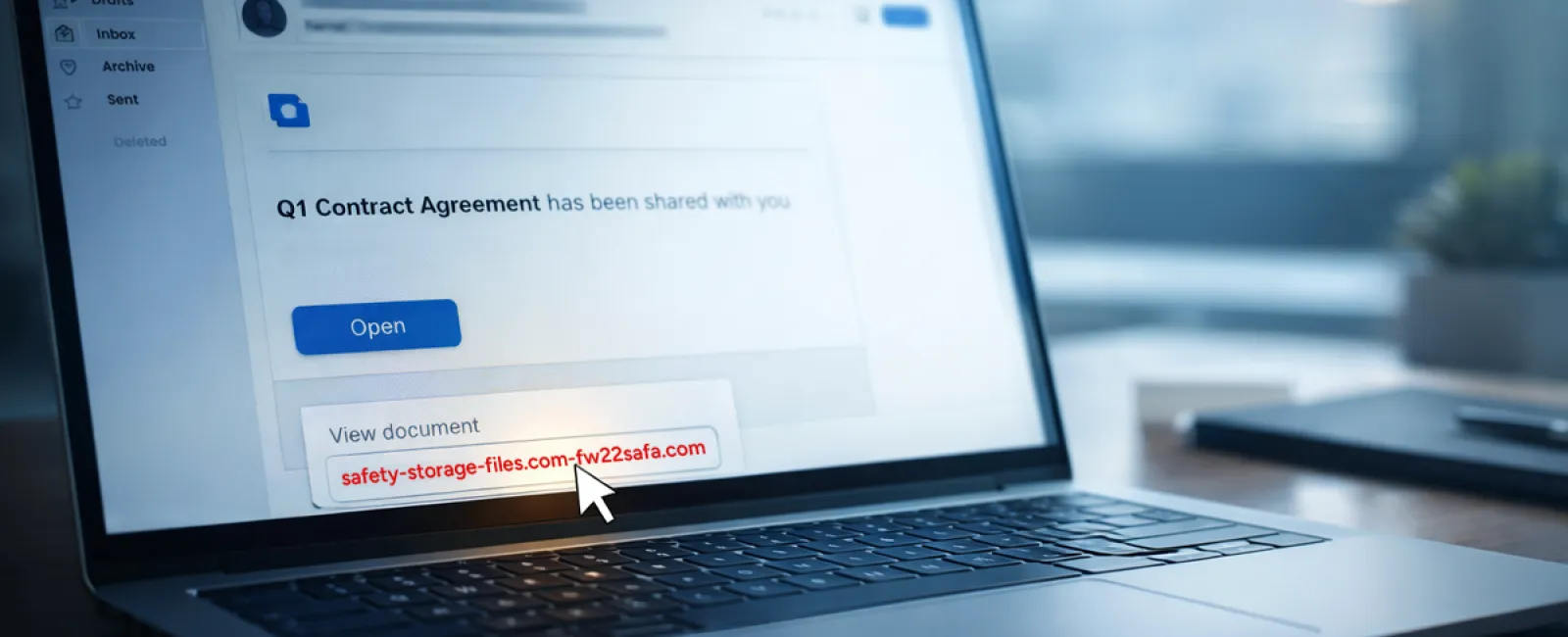
Scam #2: "Your File Is Ready" Phishing Emails
This scam blends seamlessly into everyday workflows.
An employee gets an email claiming a document—like a contract via DocuSign or a spreadsheet in OneDrive—has been shared.
It appears genuine, with correct sender names and familiar formatting.
One click leads to a login prompt. Entering credentials hands control to attackers who infiltrate your company's cloud systems.
These phishing attempts leveraging trusted platforms have surged by 67% in 2025 alone, with Google Slides-related attacks growing over 200% in six months.
Alarmingly, employees are seven times more susceptible to malicious links disguised as trusted file shares than random emails.
Newer scams are even harder to detect as attackers use compromised accounts to send legitimate-looking notifications from Google's or Microsoft's servers, bypassing spam filters.
How to guard against it: Train employees to avoid clicking unexpected file-sharing email links. Instead, log into these platforms directly via browsers to verify legitimacy. Restrict external sharing permissions and activate alerts for unusual sign-in activity—simple IT settings that dramatically cut risk.
A small habit change protects big assets.
Scam #3: Highly Convincing Phishing Emails
Gone are the days when phishing emails were easy to spot due to poor language and obvious mistakes.
Today's AI-generated phishing messages boast a 54% click rate—more than four times higher than human-written ones—because they sound authentic, referencing real companies, roles, and workflows.
Attackers tailor emails by department—HR gets fake employee checks, finance gets fraudulent vendor payment requests. In one study, 72% of recipients engaged with vendor impersonations, far higher than other scams.
These emails appear calm, professional, and urgent without drama, blending into typical inboxes unnoticed.
Effective safeguards include: Verifying all requests involving credentials, payments, or sensitive data via a secondary method such as a phone call or in-person confirmation. Prior to clicking links, employees should hover over sender addresses to confirm authenticity. Recognize urgency in emails as a red flag, not a reason to rush.
True security empowers employees without fear.
The Bottom Line
These scams exploit trust, authority, timing, and the hope that "this will only take a second."
The real issue isn't careless employees—it's flawed systems that assume everyone can always slow down and make perfect decisions under pressure.
If one hasty click can cause major trouble, that's a process problem, not a people problem.
And such process problems are resolvable.
How We Support You
Most business owners don't want cybersecurity to become a time-consuming responsibility or a source of stress teaching their teams what to avoid.
They simply want confidence their business is protected from hidden vulnerabilities.
If you're worried about your team's exposure—or know someone who should be—let's have an open conversation.
Book a straightforward discovery call to explore:
- The real risks businesses like yours face today
- How everyday workflows can introduce vulnerabilities
- Smart, efficient ways to reduce risks without slowing productivity
No pressure, no scare tactics—just clear insights and effective options.
Click here or give us a call at 929-523-2921 to schedule your free Call With Our CEO.
If this doesn't apply to you, please share it with someone who could benefit. Sometimes awareness is all it takes to stop a "would have clicked" before it happens.


